

 Language

We have already published an article about VPS in which we compared it with a dedicated server. This time, we focus more closely on VPS itself.
What is a Virtual Private Server?
First, we need a general definition of this hosting type, VPS.

In simple terms, a server is a powerful computer that stores the data and files that make up your website. When someone enters your domain name into a web browser, the server provides the website content to that visitor.
The “virtual” part means that VPS uses virtualization technology to divide one powerful physical server into multiple isolated virtual environments. In other words, one physical machine operates as several separate virtual servers.
The word “private” means that the virtual environment allocated to you is isolated from other customers. Your assigned RAM, CPU and storage resources are controlled within your VPS rather than being used as one undifferentiated shared-hosting pool.
How does VPS work?
VPS hosting simulates many characteristics of a dedicated server even though several customers use the same physical server. In other words, the environments are separated virtually even though they share underlying hardware.

Using virtualization technology, a hypervisor creates separate virtual machines on top of the physical server. Individual users can run their own operating-system environment and install the software they need within the permissions of their VPS plan.
Because VPS isolates your files and processes from other customers at the virtualization level, it acts as a private server environment. Your website runs inside an isolated virtual instance with assigned resources such as memory, disk storage and CPU cores.
Comparison with shared and dedicated hosting
1. Shared hosting
Shared hosting is one of the most common options and is suitable for many new websites. When you purchase a shared-hosting plan, CPU, RAM and storage are provided from infrastructure that hosts multiple customer accounts.
Shared hosting has some limitations because resources and the server software stack are managed collectively. A sudden resource-intensive workload elsewhere on the server can sometimes affect performance, depending on how the provider isolates and limits accounts. For a new website with modest traffic, however, shared hosting can be a practical and economical starting point.
If you are looking for this type of service, you can review our web hosting plans.

We have published a separate overview of dedicated servers.
Dedicated hosting is the opposite end of the spectrum from shared hosting. Instead of sharing the physical server with other customers, you use an entire server allocated to your workload.
Naturally, this costs more, but it provides greater control over resources and software. This type of hosting is especially suitable for larger businesses and organizations with high technical, security or performance requirements.
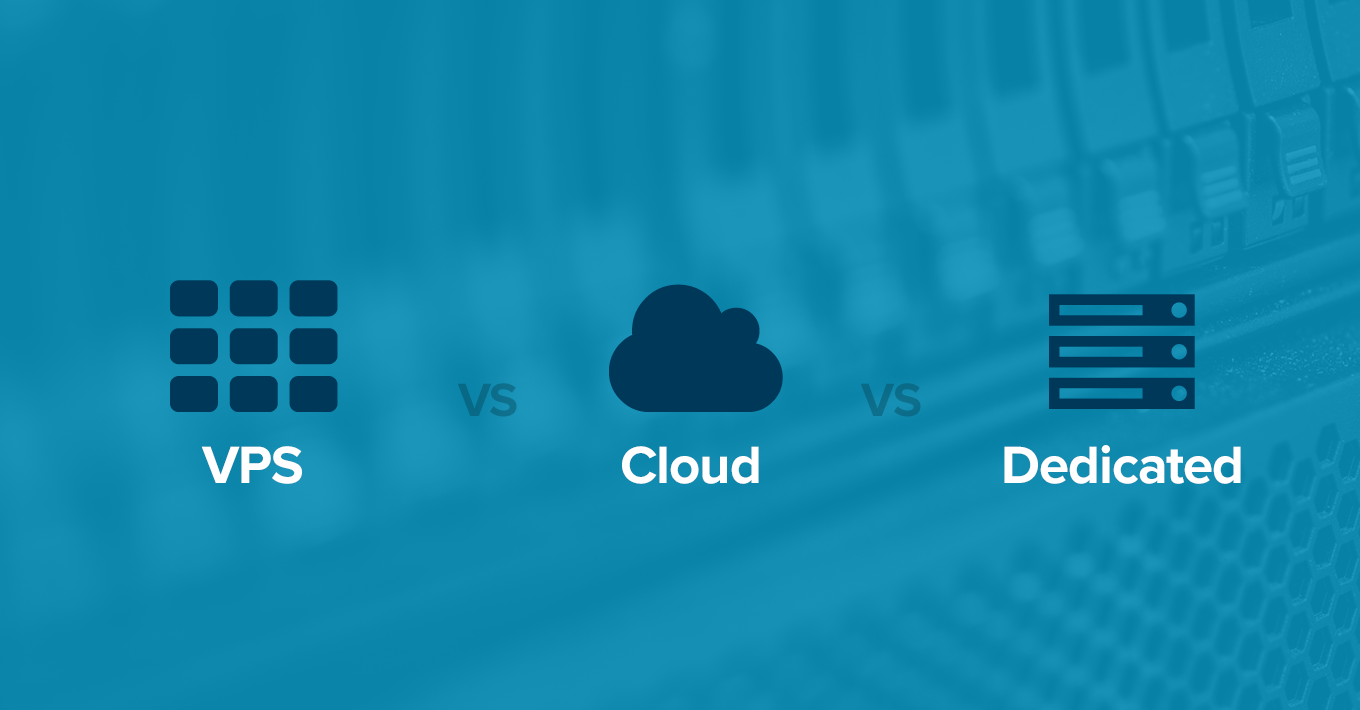
3. VPS hosting
VPS hosting sits between shared hosting and dedicated servers. When you choose a VPS, you still share the underlying physical hardware with other virtual servers.
However, your virtual instance is isolated and can have its own operating system, assigned memory, CPU resources, storage and network limits.
A VPS therefore provides many of the control and isolation benefits associated with dedicated servers at a lower entry cost.